
Digitalization in SMEs – why and how? – Part I
by Chris Ryan

Part 1 of the series:
Digitalization, data-driven business management, artificial intelligence, etc. Manufacturing SMEs are not only exposed to intense competition, but also to a flood of buzzwords. Our project experience in the SME environment shows that what is needed is not a big leap, but small, safe steps. The Smart Factory Navigator, in combination with transparent project planning and communication, is a good way to get started.
Smart Factory Navigator: Getting started doesn't have to be difficult
In SMEs with technically demanding, often very specific production, general recipes generally fall short, especially when it comes to digital transformation. Fundamental questions about sense, expediency and orientation quickly arise:
- Does digitalization in our company generate more income than expenditure?
- Where is the greatest need for more efficient, digital solutions?
- How many resources are available for the development of new solutions?
- What skills are available or required for development?
- How long will development and implementation take?
The first question in particular may come as a surprise from an IT service provider. However, under certain circumstances – for example in niche productions with very small quantities – it may make sense not to digitize. If, on the other hand, the answers to the fundamental questions reveal that digitization efforts are expedient, the Smart Factory Navigator (SFN) paves the way for a smooth start:
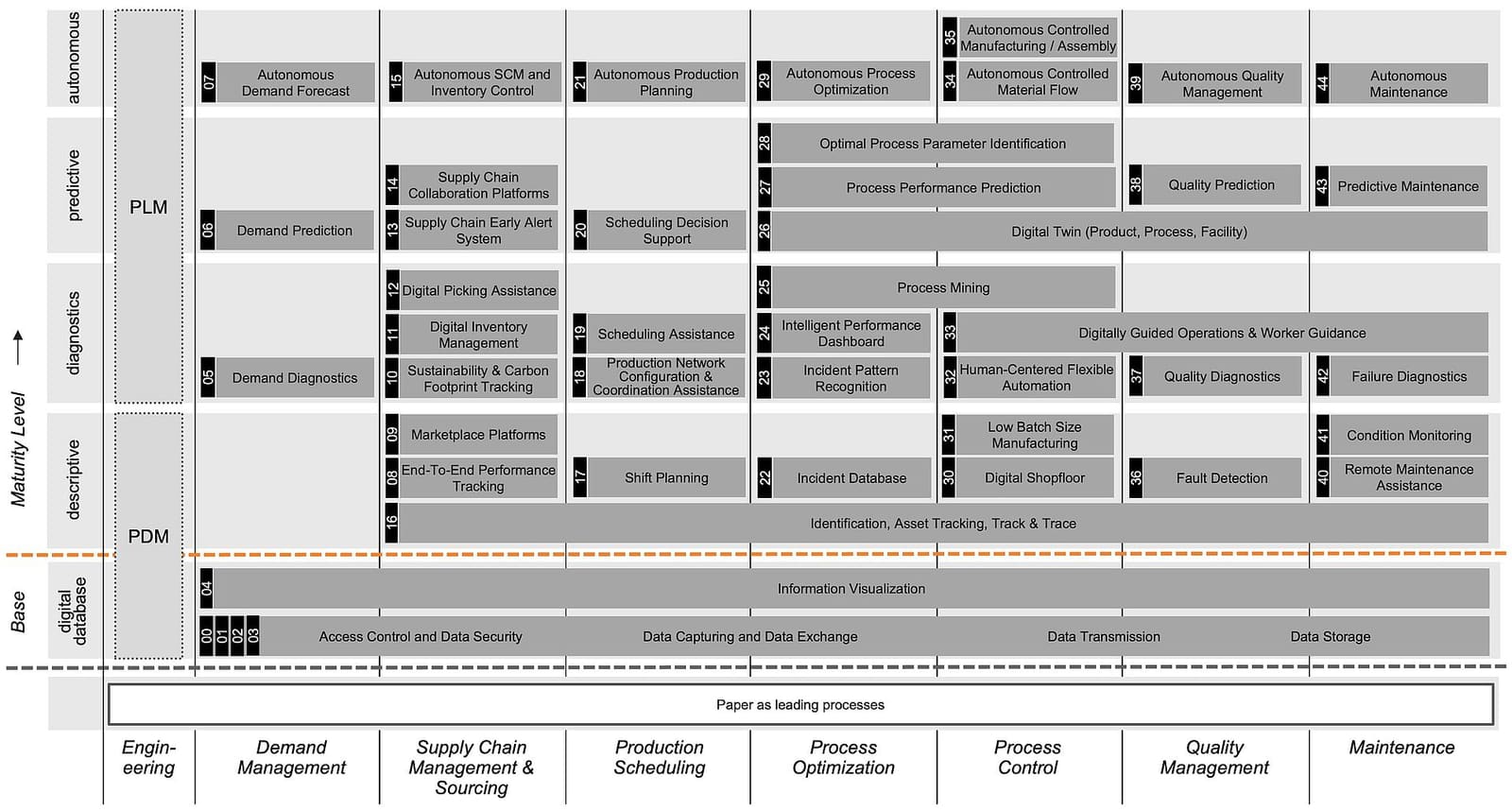
The Smart Factory Navigator enables the creation of a "digitalization plan" by comparing company divisions and development stages, i.e. 44 defined use cases.
The approach developed through many years of research compares company areas with development stages (degree of digitalization) and offers options for action based on 44 defined use cases. This makes the current state of digitization visible and areas and processes with the greatest potential for optimization tangible. A company-specific action plan can be defined on this basis.
Lean management: Getting staff on board for the sake of the solution
However, any action plan is only as good as the employees who support it. It is therefore worth taking targeted measures to emphasize organizational aspects as well as technical elements:
- Involving employees: With their know-how, employees can support digitalization projects with expertise in all phases.
- Transparent communication: Transparent communication must keep projects on track so that fear of change does not become an obstacle.
- Definition of relevant key figures: Focusing on a small number of key performance indicators (KPIs) further reduces uncertainty.
The faster employees experience the benefits, the faster they embrace new processes and solutions. For example, a dashboard in the production hall that shows employees' own work progress can act as a motivational boost. According to our experience from projects in SMEs, the consistent application of lean management and lean production principles is therefore recommended.
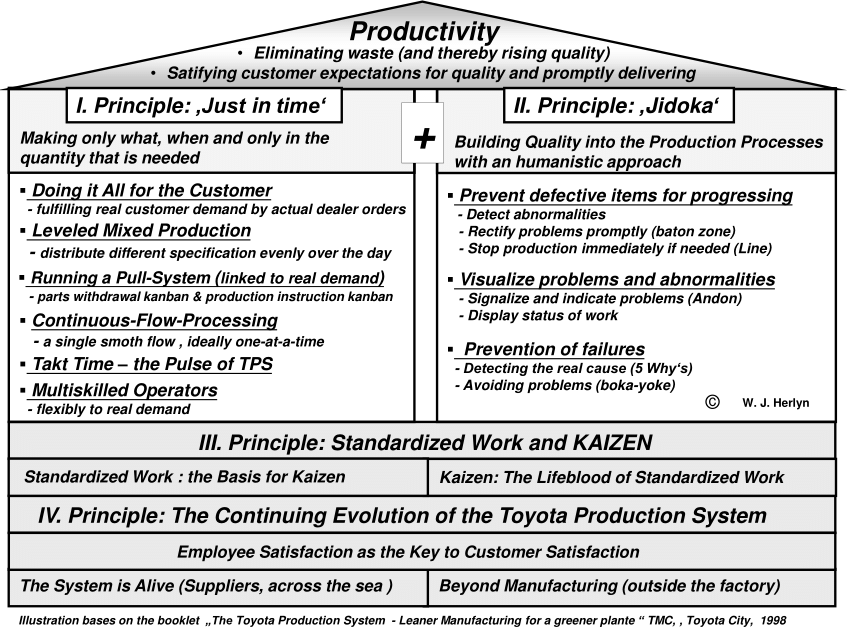
Lean production principles using the example of the Toyota production system. A "lean mindset" among employees paves the way for successful digitalization projects.
The orientation towards these principles not only serves to increase productivity. It also raises awareness for the continuous improvement of production processes in small, measurable steps to achieve major progress. With convinced and motivated employees, digital transformation, Overall Equipment Effectiveness (OEE), data-driven company, etc. are transformed from initially cryptic, sometimes unsettling terms into concrete, tangible goals.
In the second article of the series, we show how a successfully laid foundation paves the way to a transparent and responsive organization through digitalization.
iosys: An SME for SMEs
Implementing digitalization projects requires the right combination of skills. Our SME customers often already have a great deal of knowledge in certain areas. Since we are an SME ourselves, we have the flexibility to complement them with our versatile expertise and industry experience. Where we really deliver added value.
What are your goals? We would be happy to discuss with you whether and how we can make your production processes more transparent and effective. We look forward to hearing from you.